EMSTEEL becomes the first regional steelmaker to use nuclear clean energy under a new ENEC agreement, accelerating UAE industrial decarbonisation.
The UAE’s EMSTEEL has signed an updated agreement with the Emirates Nuclear Energy Company (ENEC) to source certified clean electricity generated from nuclear power, marking a major milestone in the decarbonisation of one of the world’s most carbon-intensive industries.
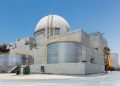
Under the agreement, EMSTEEL will procure nuclear-generated electricity from the Barakah Nuclear Energy Plant, with the energy certified through Abu Dhabi’s Clean Energy Certificates Programme (I-REC Standard). The programme is managed by the Emirates Water and Electricity Company (EWEC).
The move positions EMSTEEL as the first steel producer in the region to utilise Clean Energy Certificates derived from nuclear energy, reinforcing accountability, transparency, and innovation across a traditionally hard-to-abate sector.
Accelerating Industrial Decarbonisation at Scale
By accessing certified low-carbon electricity, EMSTEEL will directly reduce its Scope 2 emissions, lowering the overall carbon footprint of steel produced in the UAE. The agreement also advances TrueGreen, EMSTEEL’s group-wide sustainability framework that consolidates decades of decarbonisation initiatives into a unified strategy.
Clean electricity now accounts for 86% of EMSTEEL’s steel operations and 14% of its cement production, with the company targeting 100% clean electricity by 2030, in line with its long-term decarbonisation roadmap.
A Decade-Long Strategic Partnership
The updated agreement builds on a long-standing partnership between EMSTEEL and ENEC. During the construction of the Barakah Nuclear Energy Plant, EMSTEEL supplied 160,000 tonnes of nuclear-grade rebar, accounting for 60% of the project’s total rebar requirements—a contribution that supported the delivery of the UAE’s most transformational clean energy infrastructure.
Leadership Commentary
Saeed Ghumran Al Remeithi, Group CEO of EMSTEEL, said:
“Clean energy, technology enablement, and verified data are central to credible industrial decarbonisation. Through TrueGreen, we are embedding these principles across every aspect of our operations. Our collaboration with ENEC strengthens our clean energy portfolio and supports our long-term ambition to scale low-carbon steel production. It demonstrates how national partnerships can accelerate industrial transformation and position the UAE as a global leader in sustainable manufacturing.”
Mohamed Al Hammadi, Managing Director and Group CEO of ENEC, added:
“Pairing ENEC’s carbon-free baseload electricity with EMSTEEL’s continuous industrial demand shows what the energy transition looks like in practice. This collaboration provides a repeatable model for hard-to-abate sectors—lowering Scope 2 emissions today while strengthening competitiveness and supply-chain certainty. Barakah’s proven performance enables the UAE to decouple economic growth from emissions and export clean-energy solutions globally.”
Barakah’s Role in the UAE’s Energy Transition
The Barakah Nuclear Energy Plant generates approximately 40 terawatt-hours (TWh) annually, supplying up to 25% of the UAE’s total electricity demand and avoiding around 22.4 million tonnes of carbon emissions each year.
With a projected operational life of at least 60 years, Barakah plays a critical role in enhancing energy security, grid stability, and sustainable industrial growth, particularly as demand rises from electrification, AI infrastructure, and heavy industry.
Why This Matters
- Positions the UAE as a global leader in low-carbon industrial manufacturing.
- Demonstrates nuclear energy’s role in hard-to-abate sector decarbonisation.
- Strengthens energy security and industrial competitiveness.
- Creates a scalable model for other energy-intensive industries.
Find out more about this huge investment of $300 Million with this rising developer here.