From robotaxis to humanoid robots, Tesla positions AI and autonomy at the centre of its next growth cycle.
In 2026, Tesla is set to redefine its identity, moving beyond its origins as an electric vehicle manufacturer toward a broader ambition centred on autonomous transport, artificial intelligence, and humanoid robotics.
While electric vehicles remain a core foundation of their business, the company’s forward-looking strategy increasingly points toward AI-driven platforms that extend well beyond personal car ownership. Investors and industry observers now see 2026 as a pivotal year in which Tesla transitions from selling vehicles to monetising software, autonomy, and robotics at scale.
Autonomous Transport Takes Centre Stage
The companies most anticipated development for 2026 is the launch of the Cybercab, a purpose-built autonomous taxi designed exclusively for driverless operation.
Cybercab: Robotaxi Moment
- Production timeline: Volume production is targeted for April 2026, leveraging their new “unboxed” manufacturing process, aimed at reducing costs and accelerating scale.
- Unsupervised Full Self-Driving: Following successful unsupervised testing in Austin in late 2025, Tesla plans to roll out Unsupervised FSD in at least 30 cities across the United States and parts of Europe by the end of 2026.
- New revenue model: The Cybercab supports Tesla’s shift away from one-time vehicle sales toward a recurring, per-mile revenue model, positioning autonomy as a long-term cash flow engine.
If successful, robotaxis could fundamentally reshape their economics, transforming it into a mobility-as-a-service platform rather than a traditional automaker.
Optimus: Entry Into Humanoid Robotics
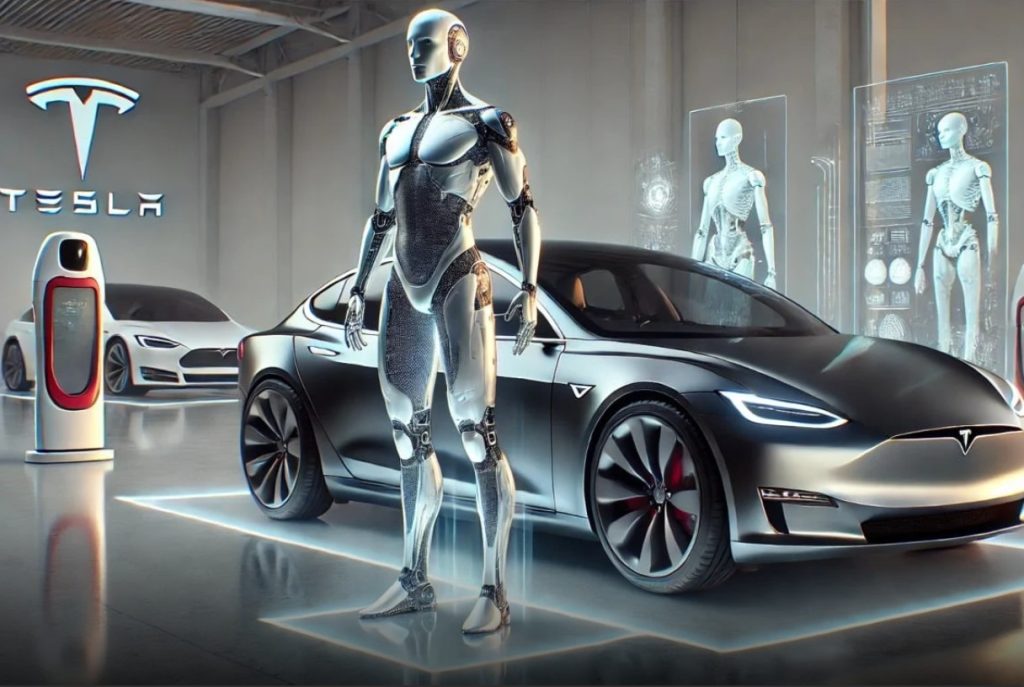
Beyond transport, Tesla’s ambitions extend into physical AI through Optimus, its humanoid robot designed to operate in real-world environments.
From Factory Floors to a Trillion-Dollar Market
- Initial deployment: Early Optimus units are expected to enter factory use in 2026, performing repetitive and hazardous tasks within Tesla’s own Gigafactories.
- Proof of scalability: Internal deployment allows them to refine performance before offering Optimus to external industrial customers.
- Shared AI foundation: Optimus runs on the same computer vision and AI stack that powers Tesla’s vehicles, marking a major step in transferring Tesla’s intelligence from four wheels to two legs.
Analysts increasingly view humanoid robotics as a multi-trillion-dollar opportunity, with Tesla positioning itself as an early leader in a sector still in its infancy.
The AI5 Chip: Owning the Intelligence Stack
To support its expanding ecosystem of autonomous vehicles and humanoid robots and is preparing to manufacture its next-generation AI5 chip in late 2026.
Designed to deliver a significant leap in processing power, the AI5 chip is expected to:
- Enable more advanced real-time decision-making for robotaxis and robots
- Reduce Tesla’s dependence on third-party chipmakers
- Strengthen Tesla’s position in sovereign, vertically integrated AI hardware
This move underscores their long-term strategy to control its entire AI stack, from silicon to software to real-world deployment.
Beyond EVs: Tesla’s Long-Term Vision
The 2026 roadmap reflects a broader strategic shift: electric vehicles are no longer the destination, but the launchpad. Autonomy, robotics, and AI-driven services now represent the company’s primary growth vectors.
If executed successfully, 2026 may be remembered not as the year of another vehicle launch, but as the moment the company redefined what it means to be a technology company in the age of artificial intelligence.
The most awaited masterpiece from Huawei is now available for pre-order. Click here