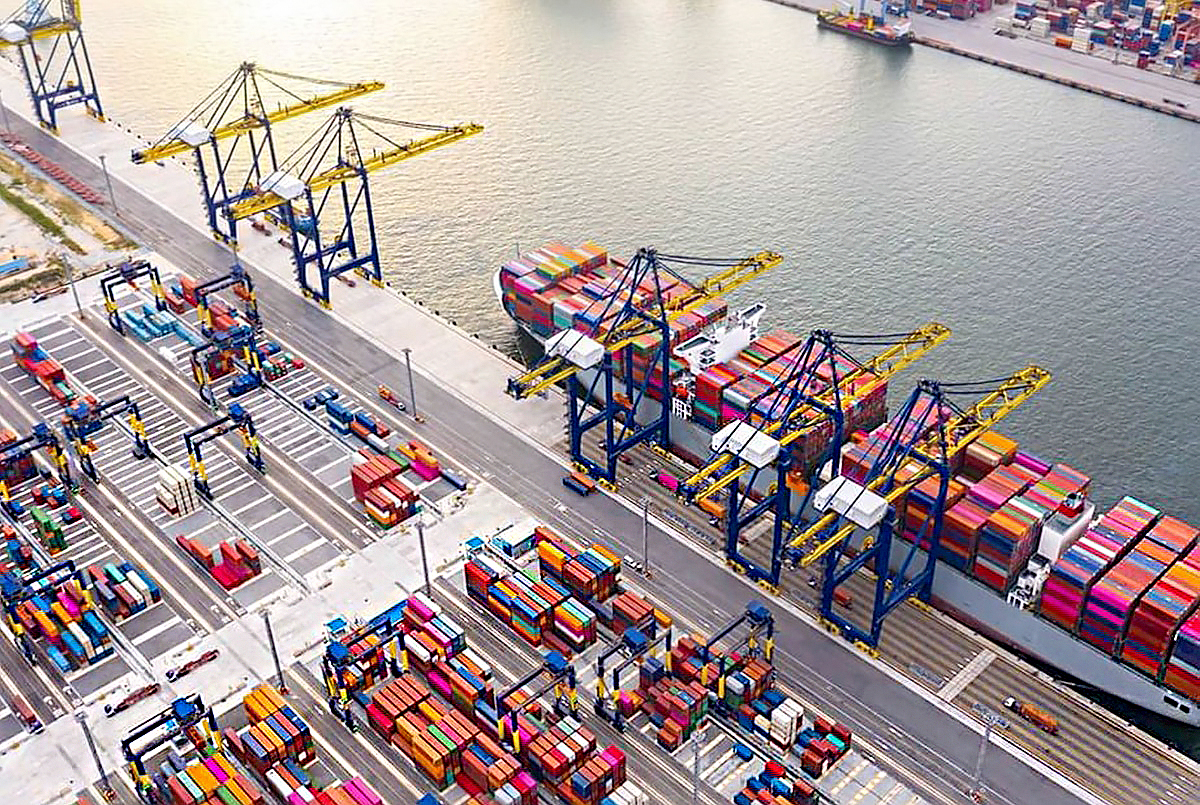
The UAE strengthens its position as a global food logistics hub as the Middle East market heads toward $100bn by 2030, driven by ports, smart infrastructure, and food cluster initiatives.
Backed by world-class ports, smart infrastructure, and policy-led innovation, the UAE is fast becoming the nerve centre of regional and global food supply chains.
As pressure mounts on the global food system, the United Arab Emirates has decisively positioned itself as one of the world’s most critical food logistics hubs—leveraging strategic geography, policy foresight, and world-class infrastructure to secure regional and international supply chains.
By integrating advanced logistics hubs with smart technologies, the UAE has built a highly efficient ecosystem spanning ports, airports, and land transport corridors. This network not only supports regional food security but also enables seamless global trade flows across the Middle East, Asia, and Africa.
According to Mordor Intelligence, the Middle East food logistics market—valued at $67.14 billion in 2025—is projected to reach $100.59 billion by 2030, growing at a compound annual growth rate of 8.42%. The UAE has emerged as the region’s top performer and now ranks third globally, behind China and India, in the Agility Emerging Markets Logistics Index.
At the policy level, the Ministry of Economy and Tourism’s Food Cluster Economy initiative has been instrumental in accelerating private-sector participation. The framework connects farms, factories, supply chains, and retail operations into an integrated value chain—creating a collaborative, “win-win” model that strengthens national competitiveness while unlocking new commercial opportunities.
Ports remain the backbone of the UAE’s food logistics leadership. Jebel Ali Port alone accounts for approximately 73% of the UAE’s food and beverage trade by value, connecting local and regional businesses to more than 150 ports worldwide and reinforcing Dubai’s status as a global trade gateway.
The country is further expanding its footprint with the launch of the Dubai Food District, a multi-phase development unveiled by DP World. Scheduled to begin operations in 2027, the district will offer cold storage, temperature-controlled warehousing, food processing facilities, digital back-office solutions, cash-and-carry services, and a gourmet food hall catering to both businesses and consumers.
“The UAE’s strategic location at the crossroads of the Middle East, Asia, and Africa makes it a natural convergence point for global trade,” said Mohamed Nasser of Halal Approval Global, noting that the country’s integrated infrastructure significantly enhances supply-chain efficiency and reliability.
Amid ongoing global challenges—ranging from price volatility to supply disruptions—the UAE continues to provide a stable, secure, and regulation-led environment for cargo movement. Its ports operate in line with the highest health, safety, and environmental standards, reinforcing confidence among global food producers, distributors, and investors alike.
As the Middle East food logistics market accelerates toward the $100 billion mark, the UAE is not merely participating in the growth story—it is shaping it.