“Harnessing open data today is not just about transparency — it is about shaping smarter policies, stronger economies, and a more resilient future.” – University of Sharjah
University of Sharjah – Strategic MoU to Advance Open Data and Financial Analytics Capabilities
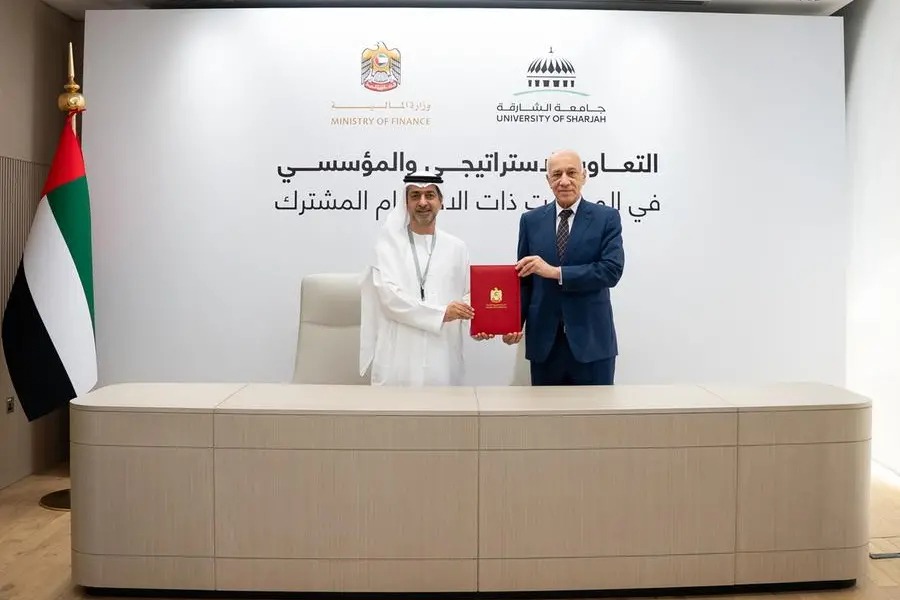
In a significant step towards reinforcing the UAE’s commitment to data transparency and advanced financial intelligence, the UAE Ministry of Finance has signed a Memorandum of Understanding (MoU) with the University of Sharjah to establish a collaborative framework focused on open data and financial data analytics.
The agreement reflects the nation’s broader ambition to position itself as a global leader in data-driven governance, while strengthening cooperation between government entities and academic institutions. The MoU aims to unlock the potential of open data by transforming it into actionable insights that support policy-making, research, and economic development.
Under the agreement, the UAE Ministry of Finance and the University of Sharjah will work closely to analyse open data and leverage it in producing research studies, reports, and analytical frameworks. These outputs are expected to significantly enhance financial decision-making and foster innovation across public-sector initiatives.
The partnership also emphasises the importance of integrating academic expertise with government operations. By tapping into the University of Sharjah’s strong research capabilities and academic resources, the Ministry seeks to enrich its data analysis frameworks and build a more robust financial ecosystem grounded in evidence-based insights.
Officials highlighted that the MoU aligns with the Ministry’s ongoing efforts to promote transparency, information accessibility, and digital transformation within the federal financial system. The initiative also supports the UAE’s open data agenda, which aims to make government data widely available for research, innovation, and public benefit.
At the University of Sharjah, the collaboration is expected to open new avenues for students and researchers, providing opportunities to engage in real-world financial data projects. This will not only enhance academic learning but also equip future professionals with the skills needed to navigate complex financial environments driven by big data and analytics.
The University of Sharjah, one of the UAE’s leading academic institutions, brings a wealth of expertise in research and innovation. With a strong emphasis on interdisciplinary studies, the university is well-positioned to contribute to the development of advanced analytical models and financial research outputs that support national priorities.
Senior officials from both entities underscored the importance of bridging the gap between academia and government. They noted that such partnerships play a crucial role in developing national talent, enhancing institutional capabilities, and driving sustainable economic growth.
From the Ministry’s perspective, the agreement represents a continuation of its strategy to build strategic alliances that strengthen the UAE’s financial infrastructure. By leveraging academic partnerships, the Ministry aims to improve the quality and depth of its financial insights, ultimately supporting more informed policy decisions.
Leaders involved in the signing expressed confidence that the collaboration would contribute to the UAE’s long-term vision of becoming a global hub for innovation, research, and knowledge-based development.
They further stressed that open data is not just a transparency tool, but a powerful driver of innovation. When analysed effectively, it can reveal patterns, trends, and opportunities that can shape economic strategies and enhance public sector performance.
The MoU also reinforces the UAE’s proactive approach to embracing emerging technologies and modern analytical techniques. By combining government data resources with academic expertise, the partnership aims to create a dynamic ecosystem for financial analytics, enabling the country to stay ahead in an increasingly data-centric global landscape.
As the UAE continues to invest in digital transformation and knowledge economies, initiatives like this highlight the growing importance of collaboration in unlocking the full value of data. The agreement is expected to serve as a model for future partnerships between government entities and academic institutions across the region.