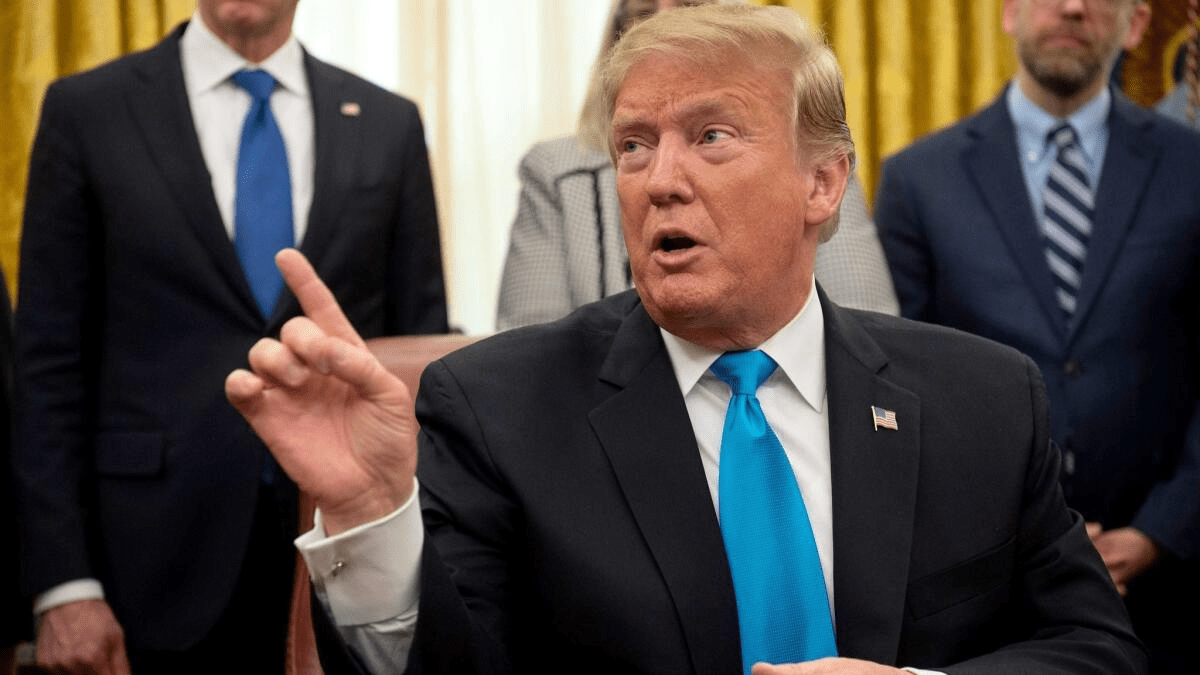
Global energy markets experienced a wave of sudden relief this week as President Trump abruptly canceled planned military strikes against Iran, instantly causing oil prices to fall. The dramatic reversal by Trump not only defused an immediate geopolitical crisis with Iran but also sent oil prices tumbling from their recent, anxiety-driven highs. After days of escalating rhetoric and localized military clashes, this sudden pivot toward diplomacy has fundamentally shifted the immediate economic and geopolitical outlook.
The Threat and the Reversal
The situation reached a boiling point early Thursday when President Trump initially threatened to launch a “very hard” wave of military strikes against Tehran. The proposed operation reportedly aimed to target vital energy infrastructure, including Kharg Island, a crucial hub for the nation’s crude exports. For a few tense hours, a full-scale confrontation between the United States and Iran seemed completely unavoidable, pushing global markets into a state of deep anxiety.
However, in a rapid de-escalation, Trump reversed his position. Taking to his Truth Social platform, Trump announced the suspension of the military operation. “Based on the fact that discussions with the Islamic Republic of Iran have been brought to the highest level of Iranian leadership and approved, I have, as President of the United States of America, cancelled the scheduled strikes and bombings against Iran this evening,” Trump stated. He further noted that “final points have been, in both concept and great detail, approved by all parties involved,” signaling a potential breakthrough in regional negotiations.
The Market Reaction: Oil Prices Fall
The financial response to the news that Trump canceled the attack on Iran was instantaneous. Prior to the announcement, oil prices had surged past $90 per barrel, driven by severe fears that a U.S. strike would heavily disrupt Middle Eastern crude supplies. As soon as the cancellation was officially confirmed, oil prices experienced a sharp contraction.
Nymex WTI prompt-month crude futures fell significantly, dropping to $86.72 per barrel shortly after the social media post. Similarly, Brent crude, the international benchmark, retreated by nearly 3%. The reality that oil prices fall so rapidly when Trump steps back from the brink with Iran underscores just how heavily a geopolitical risk premium was priced into the market. Business Insider highlighted the broader market impact, noting, “It’s been a week of withering volatility for the US stock market,” as traders quickly unwound their defensive positions across both commodities and equities.
The Geopolitical Context
To fully understand why Trump taking a step back from strikes on Iran made oil prices fall so violently, one must look at the broader regional conflict. The preceding days were marked by heavy, low-intensity clashes. U.S. Central Command had recently conducted “self-defense strikes” after an incident involving a U.S. Apache helicopter near the Strait of Hormuz, prompting retaliatory drone and missile fire targeting military installations in Jordan and Kuwait.
Furthermore, with Iran previously experiencing a massive 18% slump in crude production due to tightening U.S. blockades, the threat of direct military action against its remaining infrastructure terrified the energy sector. By pulling back, Trump temporarily secured the physical flow of oil.
What Lies Ahead
While the immediate threat has dissipated and oil prices continue to reflect a calmer landscape, the underlying tensions between the U.S. and Iran remain unresolved. Trump has indicated that a broader diplomatic agreement could be formalized shortly, emphasizing that economic pressure will persist until a transaction is fully finalized.
For now, the global economy breathes a sigh of relief. The decision by Trump to halt the bombardment of Iran ensured that oil prices did not spiral out of control. However, as long as the structural disputes between Washington and Tehran persist, the market will remain vigilant, knowing that the next geopolitical flashpoint is only one headline away.