When people talk about Dubai’s economy, they talk about real estate, tourism, financial services and technology. They rarely talk about sport. That is a mistake, because Dubai’s sports sector contributes more than AED 9 billion to the emirate’s GDP annually, representing approximately 2.35 per cent of the economy, and supports at least 105,000 jobs across sport and related industries. Dubai’s long-term strategy seeks to raise that contribution to 4 per cent of GDP. That is not a leisure ambition. It is an economic development strategy backed by infrastructure investment, event acquisition and a systematic approach to building the UAE’s reputation as the region’s most important sporting destination.
The UAE continues to consolidate its position as a global model for investing in people through sport, supported by an integrated ecosystem that combines infrastructure development, community participation and talent development. This direction is underpinned by the continued support of UAE leadership, which has attached considerable importance to the sector through investment in world-class facilities, and a long-term strategic vision that treats sport as a tool for comprehensive development rather than simply entertainment.
“Dubai has reinforced its position as one of the world’s leading capitals of the sports economy, driven by an integrated strategic vision that has transformed sport into a vital economic sector with a growing contribution to GDP, while supporting sustainable development goals and enhancing the emirate’s appeal for investment, tourism and business.”
— Gulf News, Dubai Strengthens Role as Global Sports Economy Hub (June 28, 2026)
The Events That Make the Economic Case
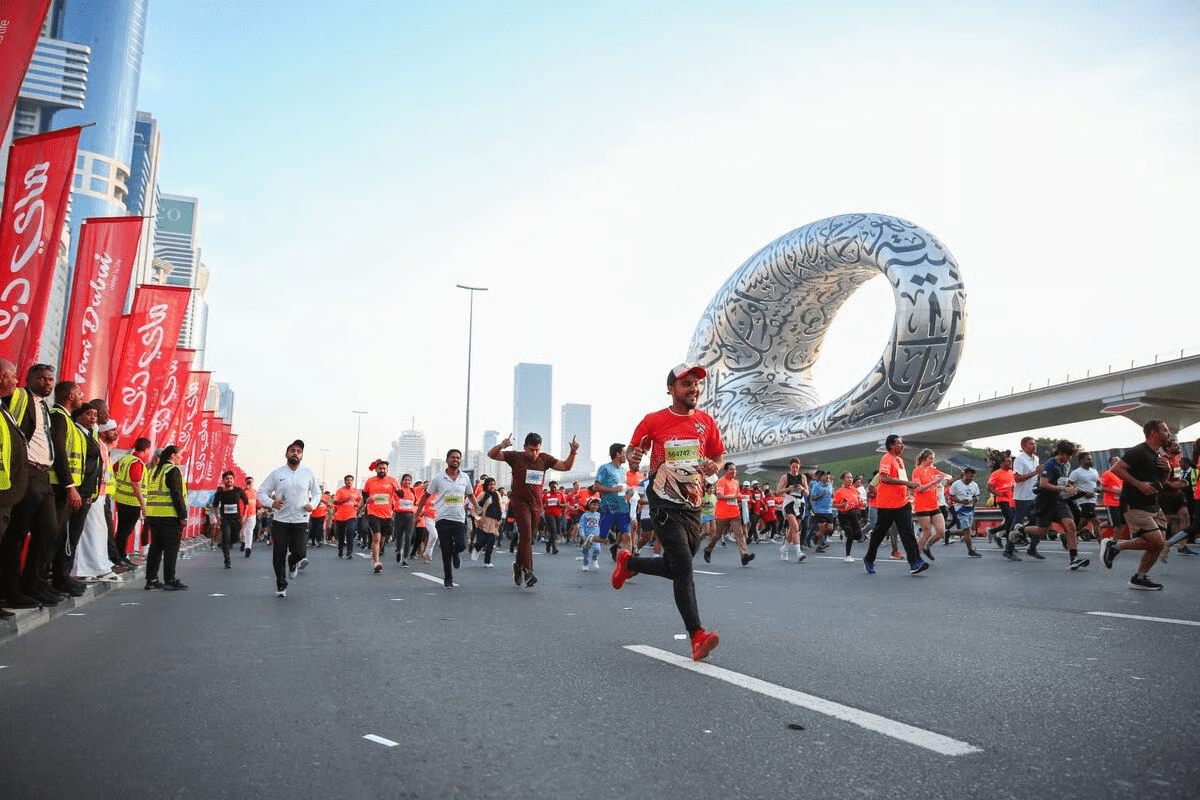
The Dubai World Cup. The Abu Dhabi Grand Prix. Dubai Tennis Championships. DP World Tour golf. The UAE leg of the rugby Sevens World Series. The Dubai Marathon. These are not just sporting events. They are economic events that generate hotel bookings, restaurant revenue, retail spending, media rights fees and brand exposure that extend well beyond the dates of the competition. Sport is one of the few categories of event where international media coverage is guaranteed, where audiences are genuinely engaged and where the association with a destination is positive and durable.
The UAE’s travel and tourism sector contributed AED 257 billion, approximately 13 per cent of GDP, in 2024. Sport strengthens this ecosystem by creating additional reasons to visit, spend, invest and return. Every major international sporting event that the UAE hosts extends the active season for hotels, restaurants, transport and retail, and generates content that circulates globally long after the event ends.
The Human Capital Dimension
The most underappreciated aspect of the UAE sports economy is not the events or the infrastructure. It is what sustained investment in sport does to the people who participate in it. Active populations are healthier populations, and healthier populations are more productive workforces. The expansion of community sport programmes, active lifestyle initiatives and school sport infrastructure that the UAE has delivered over the past decade is building a population health dividend that will show up in healthcare cost reductions and workforce productivity for years to come.
“At its most consequential, investment in sport is investment in human capital. Properly designed, investment in sport can strengthen human capital, generate demand across multiple sectors and create social returns that conventional measures of GDP do not always capture.”
— Economy Middle East, Beyond the World Cup: Why Sport Is One of the Most Strategic Investments (July 2026)
The sports economy of the UAE is already significant. The strategy in place is designed to make it transformative. The businesses that understand sport as an economic sector rather than a leisure category are the ones best positioned to participate in what is being built.