

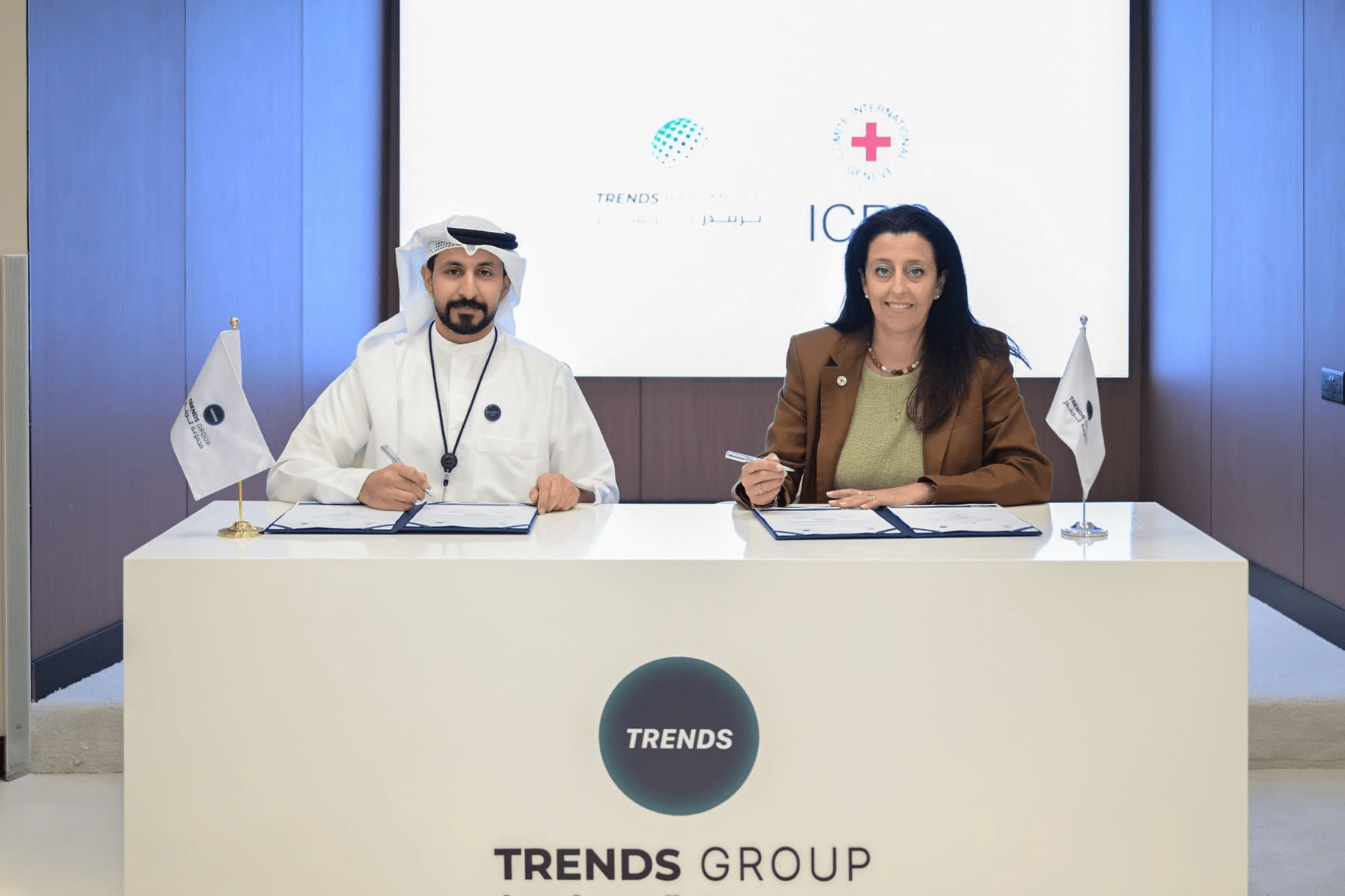
In a truly vital move for global disaster response and conflict resolution, TRENDS Barometer has officially signed a Memorandum of Understanding (MoU) with the International Committee of the Red Cross (ICRC) in the UAE. This remarkable partnership between TRENDS and the ICRC within the UAE promises to revolutionise how humanitarian crises are monitored and addressed globally, paving the way for unprecedented data-driven relief efforts.

The official signing ceremony took place at the prestigious TRENDS Dubai headquarters. The landmark agreement was executed by Valentina Bernasconi, Head of the ICRC Delegation in the UAE, and Ali Abdullah Al Ali, Director of TRENDS Dubai. This alliance forms a cornerstone in the global effort to better understand and mitigate the impacts of international conflicts through rigorous public opinion surveys, highly specialised field research, and comprehensive analytical studies.
Addressing the Needs of the Most Vulnerable
Under the newly forged MoU, the two renowned entities will jointly design and implement extensive questionnaires and in-depth field studies. These robust research tools aim to measure public opinion trends in communities severely affected by violent conflict, natural disasters, and systemic displacement. By accurately identifying the specific humanitarian needs of the most vulnerable and marginalised groups, both TRENDS and the ICRC hope to significantly improve the efficiency of on-the-ground relief operations.
The integration of scientific data collection into emergency response is a game-changer. Rather than relying on broad estimates, relief organisations can now pinpoint the exact resources required by a specific demographic in real time, drastically reducing waste and ensuring that lifesaving aid reaches those who need it most urgently.
The Region’s First Humanitarian Index
One of the most highly anticipated outcomes of this collaboration is the planned creation of the region’s very first humanitarian index. This innovative metric will be specifically dedicated to the sustainable, long-term monitoring and analysis of evolving humanitarian developments and essential needs worldwide.
Shedding light on the ambitious scope of this project, Fahad Al-Mahri, General Manager of TRENDS Barometer, outlined the transformative potential of the new metric. He noted that the two parties intend to launch an innovative index to measure public awareness of international humanitarian law among civilians in different countries.
Furthermore, Al-Mahri explained the practical applications of the research, stating:
“The index will also assess access to essential services, including healthcare, education, food, and shelter, in conflict zones, as well as track affected and displaced populations worldwide. The index will be accompanied by in-depth analyses to help humanitarian organisations better direct assistance and allocate relief resources.”
Empowering Relief with AI and Geospatial Analysis
Beyond traditional surveying methods, the MoU emphasizes the integration of cutting-edge technology into humanitarian operations. By pooling their respective resources, TRENDS and the ICRC will leverage advanced technologies to decode complex crises.
Highlighting the importance of this modern approach, Valentina Bernasconi explained how the partnership will drastically elevate current emergency operations. She noted that the initiative will help maximise the impact of humanitarian and volunteer initiatives while supporting the development of emergency relief response mechanisms through meticulous data collection and public opinion measurement.
Bernasconi further elaborated on the technological synergy between the two organisations:
“The cooperation will also include the exchange of expertise in geospatial analysis and the use of artificial intelligence technologies to analyse big data and humanitarian consequences, thereby supporting the committee’s efforts in conflict-affected areas.”
A Future-Focused Collaboration
By fusing the unmatched analytical prowess of TRENDS Barometer with the vast, on-the-ground humanitarian experience of the ICRC, the UAE is once again proving its dedication to fostering impactful global solutions. This MoU does not merely represent a sharing of resources; it marks a structural evolution in how the international community will respond to human suffering.
As the first data sets begin to emerge from this collaboration, global relief agencies will be equipped with the precise, actionable intelligence required to save lives, rebuild fractured communities, and uphold the dignity of those caught in the crossfire of international conflicts.






Comments 1