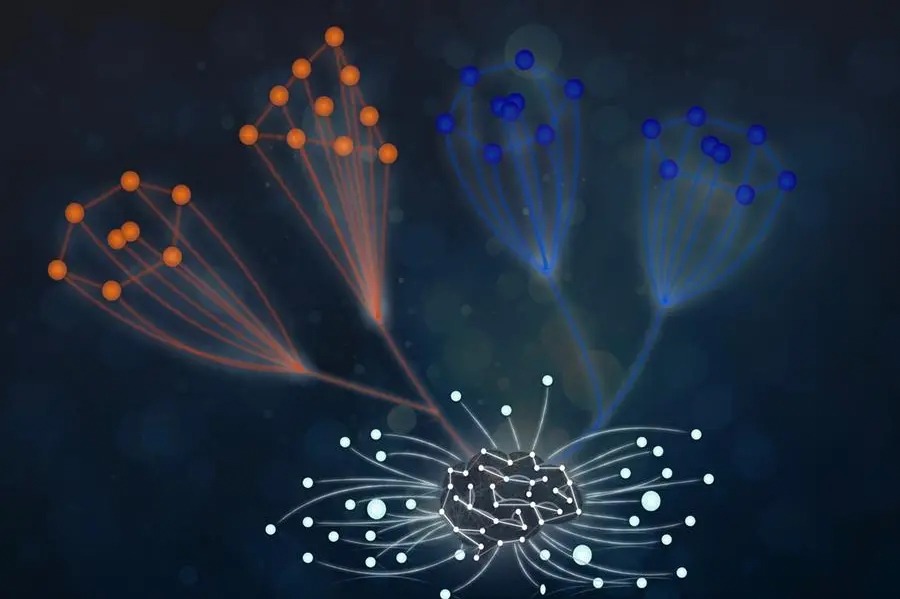
“When AI begins to rediscover the laws of physics on its own, it signals a new era where machines become partners in uncovering the universe’s deepest secrets.” – NYU Abu Dhabi
NYU Abu Dhabi study highlights how artificial intelligence can accelerate scientific discovery and uncover hidden patterns in the universe
A groundbreaking study by researchers at New York University Abu Dhabi (NYUAD) has demonstrated that artificial intelligence can successfully reconstruct the fundamental principles of particle physics, marking a significant leap forward in AI’s use for scientific discovery.
Published in the Journal of High Energy Physics, the research reveals that relatively simple AI models were able to independently rediscover key concepts that took human physicists decades to establish, including the foundational framework known as the Standard Model.
The study represents a major milestone in the intersection of physics and artificial intelligence, suggesting that AI could play a transformative role in uncovering new laws of nature and accelerating future breakthroughs in science.
The research team, comprising Aya Abdelhaq, Pellegrino Piantadosi, and Fernando Quevedo, trained AI systems using historical experimental data from particle discoveries made during the 1950s and 1960s. Without prior exposure to the mathematical frameworks used by physicists at the time, the AI was able to identify the underlying structures and relationships governing subatomic particles.
Among the rediscovered concepts were fundamental symmetries such as baryon number, isospin, and charm, along with the well-known “Eightfold Way” classification system, which organises particles into structured families. The AI also successfully reproduced Regge trajectories, which describe the relationship between a particle’s mass and its spin—an achievement that closely mirrors experimental observations.
The ability of AI to independently derive these principles from raw data highlights its potential as a powerful analytical tool, capable of uncovering patterns that may not be immediately visible to human researchers. – NYU Abu Dhabi
According to Piantadosi, the findings demonstrate that artificial intelligence can go beyond data processing and begin to reveal deep physical laws directly from experimental evidence, opening new possibilities for identifying undiscovered particles and previously unknown patterns in nature.
This development is particularly significant given the complexity of the Standard Model, which was built over decades through a combination of theoretical insights and experimental validation, including the discovery of quarks—the fundamental building blocks of protons and neutrons.
“When AI begins to rediscover the laws of physics on its own, it signals a new era where machines become partners in uncovering the universe’s deepest secrets.” – NYU Abu Dhabi
By showing that AI can reach similar conclusions independently, the study provides strong evidence that machine learning could be used as a discovery engine in fundamental physics, rather than simply a supporting tool.
Beyond particle physics, this research has implications across multiple scientific disciplines. AI-driven analysis could accelerate discoveries in fields such as cosmology, materials science, and quantum computing, where identifying hidden relationships within complex datasets is critical.
The findings also reinforce the UAE’s growing role in advanced research and innovation, with NYU Abu Dhabi emerging as a leading centre for interdisciplinary studies that combine artificial intelligence, data science, and fundamental physics.
As global research increasingly turns to AI-driven methodologies, studies like this signal a shift towards a future in which machines collaborate with scientists to unlock deeper insights into the universe. The ability to reconstruct past discoveries is only the beginning; the next frontier is identifying entirely new phenomena that have yet to be observed.
NYU Abu Dhabi: With artificial intelligence now demonstrating the capability to rediscover the building blocks of physics, the path is being paved for a new era of exploration—one where data, computation, and human curiosity converge to reveal the fundamental laws that govern reality.