Here is a number that puts the UAE’s food security challenge into stark perspective. The country imports approximately 80 to 90 per cent of its food. In a region where geopolitical disruption, climate-driven supply chain volatility and water scarcity are structural realities rather than hypothetical risks, that dependence is not just a commercial problem. It is a national security one. The UAE knows this. And the response it has built is genuinely one of the most innovative in the world.
The UAE FoodTech Challenge, organised by the International Affairs Office at the UAE Presidential Court and Tamkeen in partnership with the Gates Foundation, concluded at Abu Dhabi Sustainability Week in January 2026 with $2 million in prizes distributed to four winning startups working on food loss reduction, climate-resilient crops and sustainable food systems. Past winners of the challenge have raised over $48 million in follow-on funding and launched more than 50 pilot projects across the UAE and other markets. This is not a competition. It is a pipeline.
“Building resilient and secure food systems is central to the UAE’s long-term vision for a prosperous future. The latest winners now join a growing community of past awardees who have raised over $48 million in follow-on funding and launched more than 50 pilot projects across the UAE and beyond.”
— Rima Al Mokarrab, Chair of Tamkeen and Co-Chair of the UAE FoodTech Challenge (Innovation News Network, January 2026)
What Is Actually Being Built
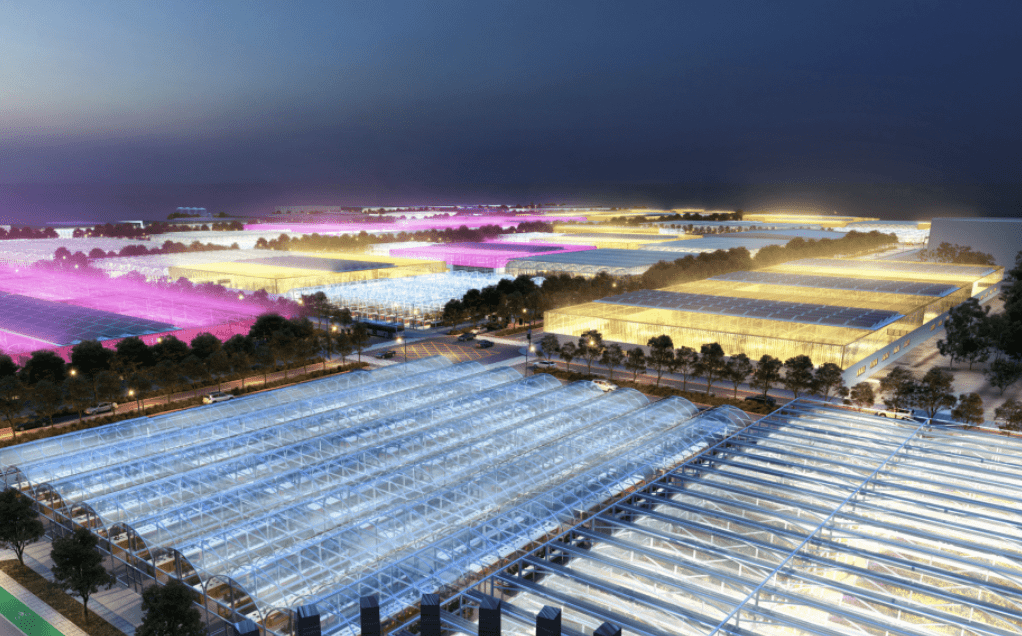
Food Tech Valley in Dubai is a technology hub designed to triple the UAE’s food production. In 2024 it entered an agreement with ReFarm to build a high-tech waste-to-value gigafarm capable of growing more than 3 million kilograms of produce annually with on-site food waste recycling, targeting operational status in 2025 across just over 80,000 square metres using AI-driven vertical farming technology. The Abu Dhabi Investment Office’s AGWA cluster, standing for AgriFood Growth and Water Abundance, is building the infrastructure for alternative protein development, precision agriculture and desert farming innovation.
The Food Innovation Hub UAE, launched at COP28 and now 18 months into operation, has introduced its Access Programme to help food and agriculture innovators grow by connecting them with resources, capital, networks and UAE-based pilot partners. Current partners include Khalifa University, ICBA and Silal. The Producer’s Collective, a flagship initiative within the Hub, brings together commercial agriculture producers representing over AED 1 billion in UAE agriculture investments to champion UAE-grown produce.
Why the UAE Is the Right Place to Solve This
The argument for the UAE as a centre for food security innovation is not obvious but it is compelling. The country has every constraint that makes food production difficult: minimal arable land, extreme heat, scarce freshwater, high energy costs. But it also has abundant capital, world-class logistics infrastructure, a government prepared to make long-term bets on technology, and the ambition to not just solve its own food security problem but to export those solutions to the climate-stressed regions of the world that will need them most in the coming decades.
“Through the UAE FoodTech Challenge, winning startups are embedded within a proven development ecosystem where advanced technologies, policy leadership, and global expertise come together to accelerate solutions from pilot to scale. This is how innovation is translated into measurable impact, from the UAE to climate-vulnerable regions worldwide.”
— Fatema Almulla, Senior Specialist Development, International Affairs Office at the UAE Presidential Court (PRNewswire, January 2026)
The country that imports nearly all of its food is building the technology to change that, and to help other countries do the same. That is an ambition worth paying attention to.