

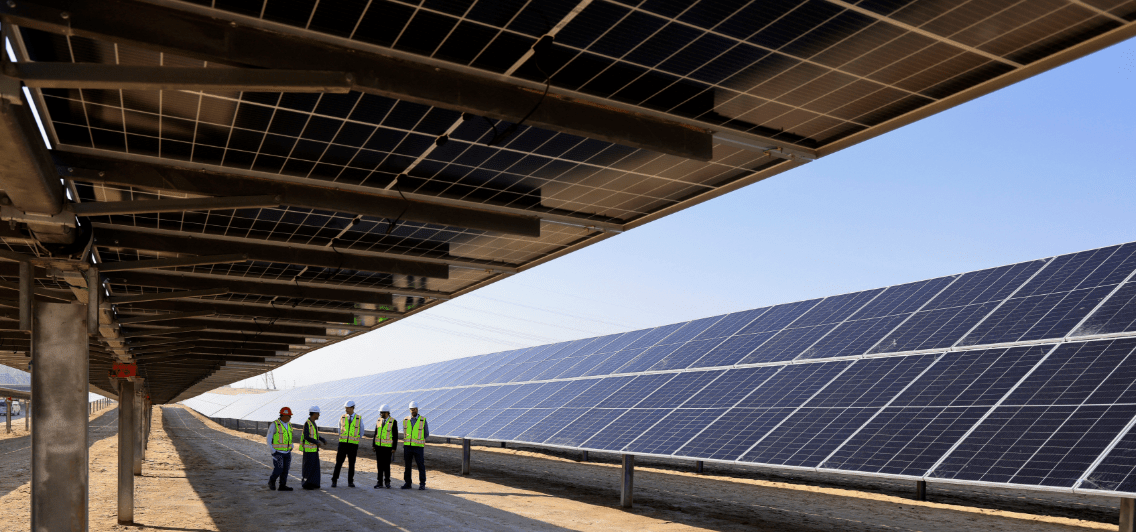
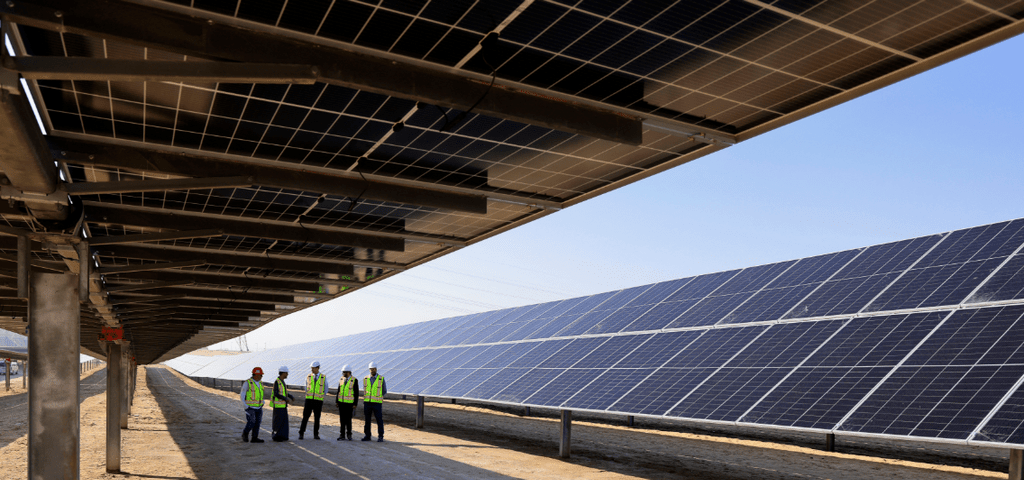
Abu Dhabi’s power demand is expected to double by 2050, rising from the current installed capacity of 25 gigawatts to 50 gigawatts, according to Abdulaziz Alobaidli, director general for regulatory affairs at the Abu Dhabi Department of Energy. The emirate plans to invest more than AED 300 billion in utility infrastructure covering generation, transmission and distribution over the coming decades to meet that demand. Clean and renewable energy’s contribution to Abu Dhabi’s power mix is set to grow from 45 per cent to 60 per cent within five years, rising further beyond that as solar, nuclear and emerging clean energy technologies scale. The doubling of power demand is not a problem to be managed. It is a measure of how fast Abu Dhabi’s economy is growing and how seriously the emirate is investing in the infrastructure required to sustain that growth through the middle of the century.
The drivers behind the demand doubling are worth understanding in detail because they explain why the trajectory is structural rather than cyclical. Population growth is a primary factor: Abu Dhabi’s population has been growing consistently and the infrastructure investment being made in residential communities, commercial zones and industrial districts is creating demand that will persist for decades. Economic expansion across manufacturing, logistics and financial services adds industrial and commercial power load that is less sensitive to price than residential demand. The adoption of digital infrastructure, particularly the data centres that are being built to support the UAE’s AI ambitions, creates power demand that is growing faster than almost any other category. And the electrification of transport, manufacturing processes and cooling systems, all driven by the UAE’s net zero by 2050 commitment, is converting energy demand that was previously met by fossil fuels directly into electricity demand.
“In the coming decades, Abu Dhabi will invest more than AED 300 billion in utility infrastructure covering generation, transmission and distribution. This investment is to cope with demand growth driven by population growth, economic expansion, adoption of digital infrastructure, AI and computing plans, and the electrification of transport and industry.”
— Abdulaziz Alobaidli, Director General, Regulatory Affairs, Abu Dhabi Department of Energy (The National, August 2026)
How Abu Dhabi Will Meet the Demand
The AED 300 billion investment programme covers three dimensions of the power system simultaneously. Generation capacity must double, which requires a combination of new solar installations, expanded nuclear capacity at Barakah, continued gas-fired generation as a dispatchable backup and emerging technologies including green hydrogen-fired power plants that can provide flexibility when renewable generation is insufficient. Masdar, in partnership with the Emirates Water and Electricity Company, is building a $6 billion project capable of producing one gigawatt of uninterrupted clean power, one of the most significant additions to Abu Dhabi’s renewable capacity in years. The Barakah nuclear plant, which currently provides approximately 21 per cent of the UAE’s total power output across its operational units, demonstrates the role that nuclear plays as the backbone of the clean baseload system that Abu Dhabi is building.
Transmission and distribution infrastructure must be expanded in parallel with generation capacity, because the locations where renewable energy is most cost-effectively generated, large solar fields in the desert, are not always close to the load centres where demand is concentrated. Building the grid infrastructure to move power from where it is generated to where it is needed, at the reliability standards that a modern economy requires, is as capital-intensive and as technically demanding as building the generation capacity itself. The AED 300 billion investment plan encompasses both, reflecting an understanding that generation capacity without the transmission infrastructure to deliver it is commercially and operationally useless.
What Abu Dhabi’s Energy Investment Means for Businesses
For businesses across Abu Dhabi that depend on reliable, affordable electricity, the AED 300 billion investment programme is a commitment to the infrastructure foundation that makes the emirate’s economic ambitions credible. A city that is positioning itself as a global hub for AI, for manufacturing, for financial services and for medical tourism cannot deliver on those ambitions without world-class power infrastructure. The Department of Energy’s confirmation that Abu Dhabi’s power and water infrastructure remained undamaged and uninterrupted during the Iran conflict is the most direct proof available that the investment in resilience and redundancy that has been made over years produces real operational outcomes under genuine pressure. For international businesses evaluating Abu Dhabi as a base, energy reliability is not a secondary consideration. It is a primary operational requirement, and the AED 300 billion investment plan is the government’s commitment to meeting it.
“Abu Dhabi’s power and water infrastructure remained undamaged and uninterrupted during the Iran conflict, demonstrating the resilience of long-term investment planning. How important it is to invest in resilience in a way that you invest in preparedness before the disruption occurs.”
— Abdulaziz Alobaidli, Director General, Abu Dhabi Department of Energy (The National, August 2026)





Comments 1