BURGENSTOCK, Switzerland — In a highly significant diplomatic milestone, Qatar and Pakistan have formally announced the successful conclusion of the inaugural US-Iran high-level committee meeting. This landmark high-level committee meeting, held under the auspices of the Islamabad Memorandum of Understanding, brought together senior delegates from the US, Iran, Qatar, and Pakistan to forge a cooperative path toward long-term peace and stability in the Middle East. Hosted at the scenic Lake Lucerne Summit in the Swiss resort of Burgenstock, this gathering marks a definitive pivot from regional hostility to structured diplomatic engagement.
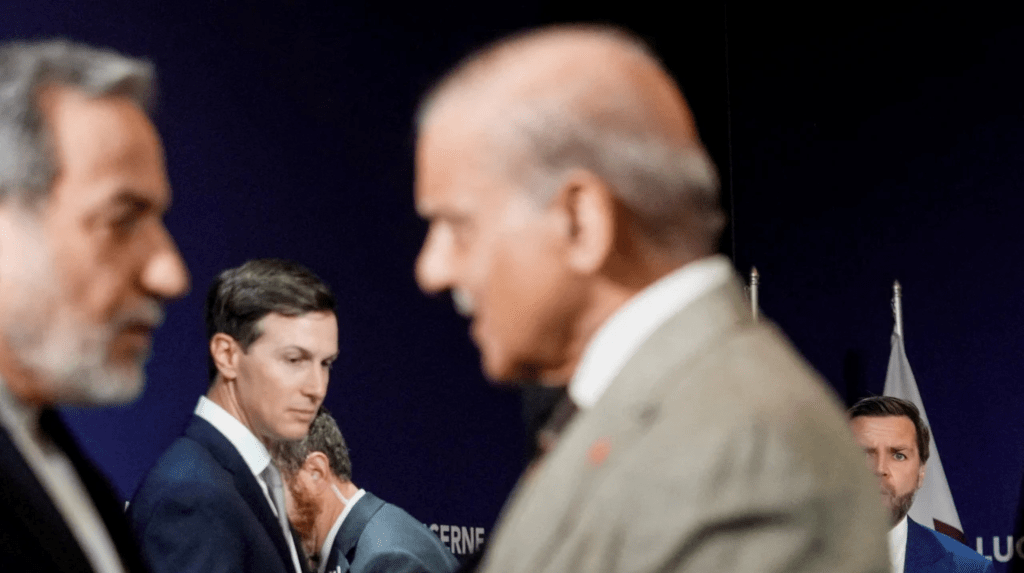
The official joint statement released by the State of Qatar and the Islamic Republic of Pakistan detailed the comprehensive diplomatic architecture that has emerged from these intensive talks. Central to this achievement is the formal establishment of the high-level committee meeting framework, which will provide rigorous political oversight over the ongoing mediation. Chief negotiators from the US and Iran are mandated to report regularly to this newly formed entity, ensuring that continuous, measurable progress is made without the historic roadblocks that have derailed previous negotiations.
According to the official joint statement disseminated by the Qatar News Agency (QNA) and the Pakistani Ministry of Foreign Affairs, “The Lake Lucerne Summit was conducted in a positive and constructive atmosphere. Encouraging progress has been made, including the creation of a mechanism for further technical talks.” The joint mediators, Qatar and Pakistan, further clarified that this supervisory committee has already agreed upon a strict roadmap aimed at finalizing a comprehensive diplomatic deal within a tight 60-day window.
To support this ambitious 60-day timeline, the high-level committee meeting authorized the immediate creation of specialized working groups. These groups, operating under the careful guidance of Qatar and Pakistan, will dive deep into the most contentious issues dividing the US and Iran. Their mandates cover nuclear protocols, the systematic lifting of economic sanctions, and the implementation of a robust monitoring and dispute resolution mechanism to perfectly safeguard the integrity of the Islamabad Memorandum of Understanding.
Beyond nuclear and economic policies, the high-level committee meeting addressed immediate regional security concerns that directly impact global financial markets. Recognizing the volatility of maritime trade routes, the US and Iran agreed to establish a direct communication line. As outlined in the joint statement by Qatar and Pakistan, this dedicated channel is specifically designed to avert accidental military incidents and miscommunications, thereby guaranteeing the safe, uninterrupted passage of commercial vessels through the strategically vital Strait of Hormuz.
Furthermore, the humanitarian and security crisis in the Levant was a central pillar of the US-Iran dialogue. The delegates at the high-level committee meeting agreed on the creation of a specialized de-confliction cell focused on the Lebanese Republic. Facilitated directly by the mediating teams from Qatar and Pakistan, this cell is tasked with ensuring strict adherence to the termination of military operations in Lebanon, providing a much-needed reprieve for the civilian population in the region.
The tone from Washington reflected a cautious but genuine optimism regarding this Qatar and Pakistan-brokered initiative. Speaking to CNN just prior to the technical sessions, US Vice-President JD Vance articulated the administration’s broader strategic hopes. “The question before us now is, how much more can we accomplish together?” Vance stated. “Can we turn over a new leaf? Can we change relations in the Middle East permanently? Or do we go back to doing things the old way, which is not our preference.”
As technical talks continue throughout the week in Burgenstock, the international community is watching closely. The unprecedented coordination between Qatar, Pakistan, the US, and Iran at this high-level committee meeting has set a new standard for multilateral conflict resolution. If the political momentum generated at Lake Lucerne can be sustained, this framework may finally close one of the most volatile chapters in modern geopolitical history.