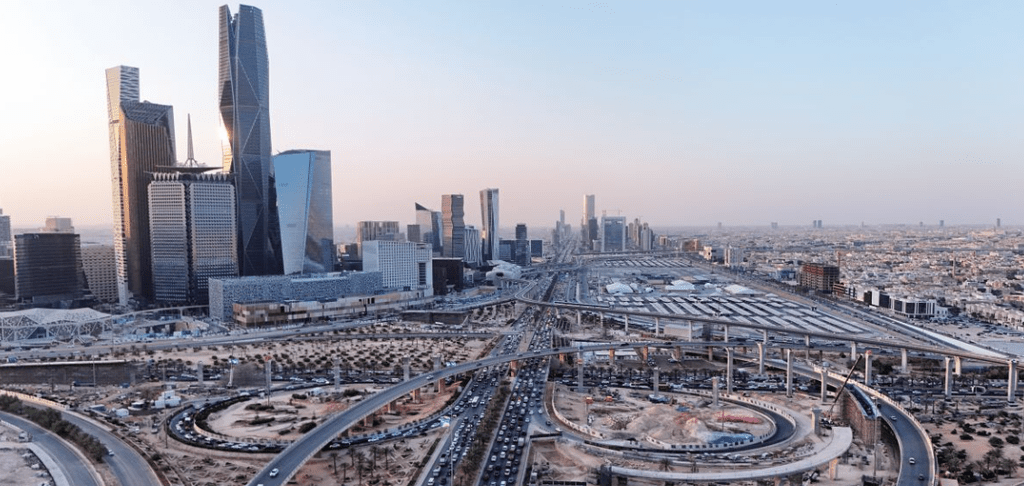
Saudi Arabia’s construction industry has undergone a dramatic shift in its workforce trajectory, moving from headcount growth of more than a third year-on-year in 2024 and 2025 to single-digit growth today, according to AGBI analysis published this morning. In 2024 and early 2025, Saudi construction was one of the fastest-growing large-scale construction markets in the world, driven by the Vision 2030 giga-project pipeline: NEOM, The Line, Roshn, Diriyah Gate, Qiddiya, and the sports and entertainment infrastructure being built to support Saudi Arabia’s ambitions as a global events and tourism destination. The headcount explosion of that period reflected a labour market in full acceleration, importing skilled and unskilled construction workers from South Asia, Southeast Asia and beyond at a pace that created genuine supply constraints in the markets those workers came from.
The single-digit growth today reflects a different phase of the Saudi construction market, one that requires careful interpretation. Contract awards are actually climbing even as headcount growth slows, which tells you that the composition of work is changing: more capital-intensive, more technology-enabled and more machinery-dependent construction is replacing some of the labour-intensive phases that drove headcount growth in the earlier period. The giga-projects are moving from preparatory earthworks and infrastructure phases, which are highly labour-intensive, into more complex fabrication, finishing and systems installation phases, which require a different mix of skills and a different workforce composition.
“Saudi Arabia’s construction industry has gone from increasing headcount by a third year-on-year in 2024 and 2025 to single-digit growth today, although contract awards are climbing and giga-projects are being delivered. The shift reflects a transition from labour-intensive preparatory phases to more capital-intensive and skills-focused construction work as Vision 2030 projects mature.”
— AGBI, Saudi Arabia Construction Sector Analysis (agbi.com, August 2026)
What the Slowdown Means for the UAE Construction Market
The Saudi construction workforce slowdown has direct implications for the UAE market, which competes with Saudi Arabia for the same pool of skilled construction labour from South and Southeast Asia. In the period of maximum Saudi construction headcount growth, the UAE faced intensified competition for skilled tradespeople, site managers, MEP specialists and the specialist fabrication workforce that complex construction projects require. Cost inflation in UAE construction labour markets during 2024 and early 2025 was partly a consequence of that competition. As Saudi headcount growth moderates and the most labour-intensive phases of the Saudi giga-projects are completed, pressure on UAE construction labour supply should ease, reducing one of the significant cost escalation factors that UAE developers and contractors have been managing.
The broader regional construction market dynamics also affect the availability of international contractors who work across both markets. Saudi Arabia and the UAE compete for the same tier of major international contractors, the global EPC firms that have the capacity and technical capability to manage projects at the scale both countries are delivering. As the Saudi pipeline moves into less labour-intensive phases, the availability of top-tier international contractors for UAE projects may improve at the margin, reducing the tender premium that UAE developers have paid for tier-one contractor capacity in recent years.
What This Signals for Vision 2030 Progress
The transition from rapid headcount growth to contract award growth in Saudi construction is a signal of programme maturation rather than programme slowdown. The giga-projects are progressing. NEOM’s infrastructure is being built. Diriyah Gate is advancing. The sports and entertainment venues are under construction. What is changing is the phase of work, not the commitment to the projects themselves. That transition from preparation to delivery is actually a positive signal for the medium-term completion trajectory of Vision 2030’s most ambitious elements, even if it produces the counterintuitive data point of slowing workforce growth alongside rising contract awards. For businesses supplying goods, services and technology to the Saudi construction market, the transition means that the composition of purchasing is shifting toward higher-skill, higher-technology products and services that complex building systems and finishing work require, generally a more attractive commercial opportunity than the commodity materials and labour services that early phases of large-scale construction demand.
“Contract awards in Saudi construction are climbing even as headcount growth slows, reflecting a transition from labour-intensive preparatory and earthworks phases to more complex fabrication, finishing and systems installation work. The giga-projects are progressing; the composition of work is changing, not the commitment to delivery.”
— AGBI, Saudi Construction Market Analysis (agbi.com, August 2026)