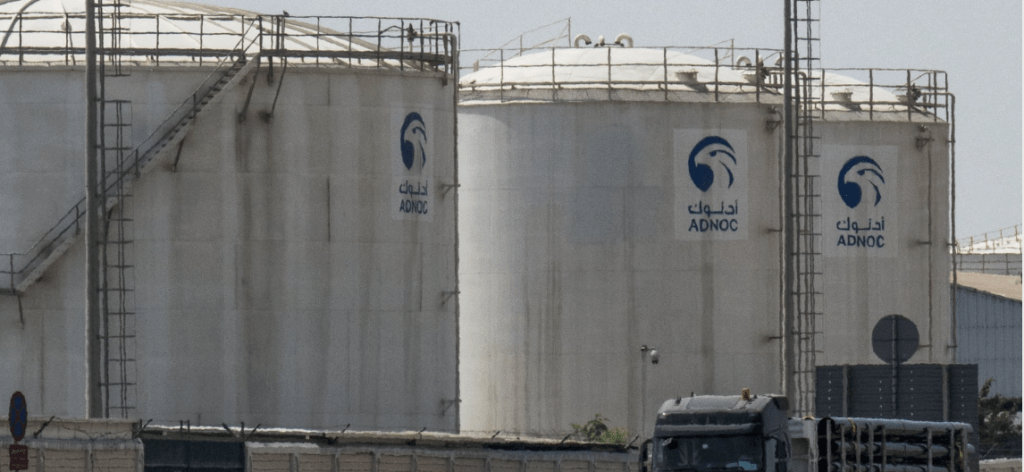
ADNOC has approved a final investment decision of $6.2 billion for the Umm Shaif Gas Cap development, one of the largest single energy investments in the UAE in 2026 and a statement about where Abu Dhabi believes the most durable long-term value in the energy sector lies. The Umm Shaif Gas Cap is an offshore field in Abu Dhabi’s territorial waters that holds significant natural gas reserves. The development will expand UAE natural gas production and LNG export capacity, positioning the country to capture a larger share of the global market for liquefied natural gas at a moment when that market is structurally undersupplied and set to remain so for years.
The investment comes at a significant moment for global energy. The disruption to shipping routes through the Strait of Hormuz during the recent conflict, which reduced oil and gas transit volumes and drove significant price volatility, reinforced for energy importers worldwide the value of supply diversity and the risk of over-reliance on any single corridor. The UAE’s ability to develop its own gas resources and export them via the Fujairah terminal, which bypasses the Strait of Hormuz entirely, is a strategic advantage that the $6.2 billion Umm Shaif investment directly strengthens. Countries that want reliable LNG supply without Hormuz exposure will increasingly look to the UAE as a preferred source.
“ADNOC’s $6.2 billion final investment decision for the Umm Shaif Gas Cap development reflects Abu Dhabi’s long-term confidence in gas as a strategic asset and the UAE’s ambition to capture a growing share of global LNG demand at a time when supply security is the defining concern of energy importing nations.”
— ADNOC, Umm Shaif Gas Cap FID Announcement (adnoc.ae, August 2026)
Why Gas Is the Right Bet in 2026
Natural gas occupies a unique position in the energy transition debate. On one hand, it is a fossil fuel with carbon emissions that count against national net-zero commitments and corporate sustainability targets. On the other hand, it is the cleanest-burning fossil fuel, a necessary bridge between coal-dependent power systems and renewable energy at scale, and the feedstock for blue hydrogen, which is increasingly central to hard-to-abate industrial decarbonisation. The countries and companies that dismissed gas investment in the early 2020s on the assumption that renewables would scale fast enough to make it unnecessary are now facing energy security crises that gas availability would have prevented.
The UAE has not made that mistake. ADNOC’s gas development strategy, which includes the Umm Shaif Gas Cap alongside the Hail and Ghasha sour gas project and the broader UAE Gas Directive to achieve gas self-sufficiency, reflects a clear-eyed view of what the energy transition actually requires over a realistic timescale. The $6.2 billion FID is the latest and largest expression of that strategy, and it arrives at a moment when the commercial case for new gas supply is as strong as it has been in a decade: LNG spot prices are elevated, long-term supply contracts are in high demand, and the geopolitical premium on supply from stable, reliable producers is significant.
What the Investment Means Beyond Energy
The Umm Shaif Gas Cap development is significant beyond its direct energy output. Projects at this scale generate substantial economic activity across the supply chain: engineering, procurement, construction, offshore services, logistics, technology integration and the long-term operational workforce that runs a producing gas field for the decades of its productive life. The UAE has been building the local content capabilities to capture a growing share of that supply chain activity through the ADNOC In-Country Value programme, which requires contractors and suppliers to measure and grow their UAE economic contribution. A $6.2 billion project is a meaningful opportunity for that programme to demonstrate its impact.
For the UAE’s broader economic narrative, the ADNOC investment also reinforces something important: the country is not treating the energy transition as a reason to disinvest from its hydrocarbon base before alternative income streams are mature enough to replace it. The wisdom of that approach is now visible in the contrast between Gulf economies that maintained their energy investment programmes and those that wavered. The UAE’s fiscal position, its sovereign wealth fund assets and its ability to invest at scale in both the energy economy and the digital economy simultaneously are all downstream consequences of that discipline. The $6.2 billion Umm Shaif Gas Cap FID is one more expression of it.
“ADNOC’s gas development strategy, including the UAE Gas Directive to achieve self-sufficiency, reflects Abu Dhabi’s recognition that natural gas will remain a critical component of the global energy mix through 2040 and beyond, and that the commercial and strategic value of being a reliable supplier to energy-importing nations justifies continued investment at scale.”
— ADNOC Strategy and Sustainability Report 2025 (adnoc.ae, February 2026)