
Syria is reopening, and Gulf companies are moving in with a speed and scale that has surprised some observers but that makes commercial and strategic sense on closer examination. Arabian Business devoted its August 2026 cover story to what it calls Syria’s great reopening, examining how Gulf companies are staking billions on a country that has been closed to international investment for more than a decade and that presents both extraordinary opportunity and genuine risk in proportions that are difficult to assess from the outside. The UAE, alongside Saudi Arabia, Qatar and Kuwait, is at the forefront of this engagement, and the commercial logic behind it reflects the same opportunistic long-term thinking that has made Gulf capital one of the most significant forces in frontier and emerging market investment over the past decade.
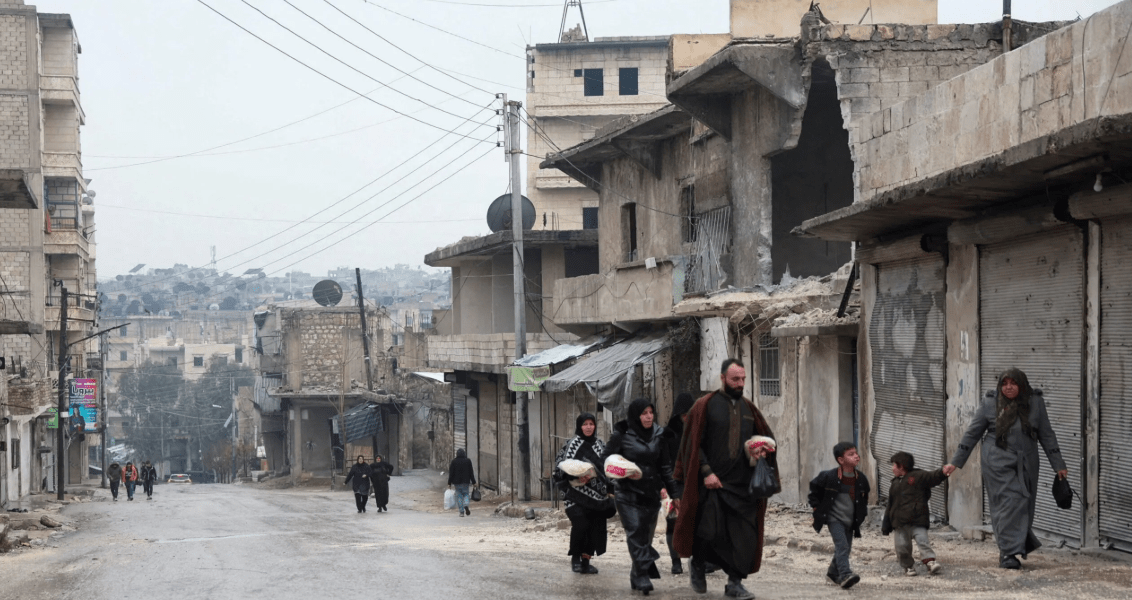
Syria’s reconstruction needs are enormous. The United Nations estimated the cost of rebuilding Syrian infrastructure, housing, health, education and economic capacity at more than $400 billion before the latest round of conflict-related damage is factored in. That number is both the scale of the problem and the scale of the opportunity for the construction companies, cement producers, logistics operators, financial institutions, real estate developers and infrastructure investors who position themselves correctly in the early stages of the reopening. The Gulf’s geographic proximity, its capital base, its construction industry expertise and its established relationships with Syrian business and diaspora communities give it structural advantages in the Syria reconstruction market that Western competitors cannot easily replicate.
“Gulf companies are staking billions on Syria’s reopening, but can ambition survive the risk? The reconstruction opportunity is real, the capital is available, and the relationships are established. The question is whether the political and regulatory environment stabilises fast enough for commercial investments to generate the returns that justify the risks being taken.”
— Arabian Business, Syria’s Great Reopening (arabianbusiness.com, August 2026)
What UAE Companies Are Doing in Syria Right Now
UAE engagement with Syria is operating on several tracks simultaneously. At the diplomatic level, the UAE has been among the most active Gulf states in normalising relations with the Syrian government that emerged from the 2024 and 2025 transition process, reopening its embassy in Damascus and re-establishing the institutional channels through which commercial cooperation is facilitated. At the corporate level, UAE construction companies, cement producers and real estate developers have been conducting market assessments and establishing local partnerships in anticipation of a reconstruction tender pipeline that analysts expect to begin in earnest through 2026 and 2027. And at the financial level, UAE banks are exploring the trade finance and project finance structures that will be required to fund the reconstruction programme, working through the complexities of sanctions frameworks that still apply to some categories of Syrian counterparty and transaction.
The Syria opportunity is not without risk, and the Gulf companies moving into the market understand that. The political transition in Syria, while the most successful the country has experienced in decades, is still in its early stages, and the institutional capacity of the Syrian state to manage a $400 billion reconstruction programme transparently and effectively is limited. Contract enforcement, property rights, regulatory predictability and the rule of law are all less developed in Syria than in the Gulf markets where UAE companies typically operate. The companies that will succeed in Syria are those that have the risk tolerance and the long-term perspective to navigate an environment that will be more difficult than their home markets for years before it becomes easier.
Why the Gulf’s Syria Bet Is Strategically Rational
The Gulf’s engagement with Syria’s reopening reflects a strategic calculation that goes beyond immediate commercial returns. For the UAE and Saudi Arabia in particular, a stable, economically recovering Syria represents a significant positive externality for the broader regional environment. A Syria that is rebuilding, that is reintegrating into the Arab economic system and that is managing its refugee population creates more stability and less pressure on the Gulf states than a Syria that remains in chronic economic dysfunction. The commercial investments being made today are therefore simultaneously returns-seeking and stability-building, which is a combination that aligns the financial incentives of Gulf capital with the geopolitical interests of the Gulf states in a way that is sustainable over a long investment horizon. The billions being staked on Syria’s great reopening are not just a commercial bet. They are an investment in the regional future that Gulf capitals have been working toward for years.
“Syria’s reconstruction needs exceed $400 billion, and Gulf capital is among the best positioned in the world to meet them: geographic proximity, construction industry expertise, established Syrian diaspora relationships and the institutional frameworks that the UAE and Saudi Arabia have been building through the normalisation process over the past two years.”
— Arabian Business, Syria Reopening Analysis (arabianbusiness.com, August 2026)