Global Muslim travel is projected to reach 262 million international arrivals and $310 billion in annual spending by 2030, according to new research cited by Arabian Business this week. That figure represents one of the fastest-growing segments in the global tourism market, driven by a combination of demographic growth in Muslim-majority countries, rising middle-class incomes across Southeast Asia, South Asia and the Middle East, and the increasing confidence of Muslim travellers in seeking international experiences that accommodate their religious practices and dietary requirements without requiring compromise. For the UAE, which is simultaneously one of the world’s most visited destinations for Muslim travellers and one of the most capable hubs for the AI and technology infrastructure that is reshaping how those travellers plan their trips, the $310 billion projection is a commercial opportunity of the first order.
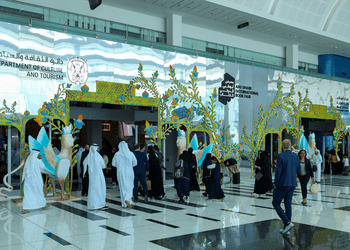
The UAE’s position in the global halal travel market is structurally advantageous in ways that go beyond its geographic centrality. Dubai and Abu Dhabi both offer world-class hospitality infrastructure, a large and diverse portfolio of halal-certified dining options, prayer facilities integrated into major tourist and shopping destinations, and a cultural environment that Muslim travellers from anywhere in the world find welcoming and familiar. Emirates and Etihad, the UAE’s flagship carriers, provide direct connectivity to virtually every Muslim-majority market in the world, making the UAE accessible as both a destination and a transit hub for travellers whose final destinations are in Southeast Asia, Europe, Africa or North America. And the UAE’s own Muslim identity gives it an authenticity in the halal travel space that purely commercial destinations cannot replicate.
“Global Muslim travel is projected to reach 262 million international arrivals and $310 billion in annual spending by 2030. AI is reshaping how Muslim travellers discover, plan and book trips, creating opportunities for hospitality brands that understand how to integrate halal standards with world-class digital discovery experiences.”
— Arabian Business, Global Muslim Travel Market Analysis (arabianbusiness.com, August 2026)
How AI Is Changing Halal Travel Planning
The AI dimension of the Muslim travel story is the element that is moving fastest in 2026. Muslim travellers have historically faced a planning challenge that non-Muslim travellers do not: the need to verify halal food options, prayer facilities, women-friendly amenities and family-appropriate entertainment across destinations where this information was fragmented, inconsistently updated and difficult to verify. AI-powered travel planning tools are addressing this challenge directly. Large language model-based travel assistants can now synthesise halal dining recommendations, prayer time data, mosque locations, women-friendly hotel policies and family activity options into personalised itineraries that were previously impossible to generate without significant manual research. The travellers who most benefit from this capability are exactly the ones who make up the Muslim travel growth market: first-time international travellers from emerging middle-class communities in Indonesia, Bangladesh, Nigeria and Pakistan who are planning experiences they have not made before.
The UAE’s AI infrastructure, strengthened by the Country Group A:5 reclassification that gives UAE technology companies license-free access to US advanced AI chips, positions the country to be a builder of these travel AI tools rather than just a beneficiary of them. Companies like Amadeus Hospitality Middle East, which operates significant technology infrastructure in the UAE, and the growing portfolio of UAE-based travel tech startups, are well placed to build the AI-powered discovery and booking tools that the $310 billion Muslim travel market will increasingly demand. The intersection of the UAE’s hospitality expertise, its AI infrastructure and its deep cultural understanding of Muslim travel preferences makes it the natural home for the companies building the technology that will define halal travel planning in the decade ahead.
What Hospitality Businesses in the UAE Should Do Now
For hotels, restaurants, tour operators and travel agencies operating in the UAE, the $310 billion Muslim travel projection is not a passive opportunity. It requires active investment in halal certification, in the digital visibility that AI-powered travel planning tools require to recommend a property, and in the staff training and operational standards that make a Muslim traveller’s experience genuinely seamless rather than merely compliant. The properties that will capture a disproportionate share of the growing Muslim travel market are not the ones with the longest list of halal credentials. They are the ones that have integrated Muslim traveller needs into every dimension of the guest experience, from the digital discovery moment through the check-in through the dining experience through the departure, in a way that feels natural and considered rather than bolted on. In a market heading to $310 billion, the difference between capturing that traveller segment and missing it comes down entirely to the quality and authenticity of the hospitality offering.
“The UAE’s position in the global halal travel market is structurally advantageous: world-class hospitality infrastructure, halal-certified dining, prayer facilities integrated into major destinations, direct Emirates and Etihad connectivity to every Muslim-majority market, and a cultural environment that Muslim travellers from anywhere in the world find welcoming and familiar.”
— Crescentrating, Global Muslim Travel Index 2026 (crescentrating.com, 2026)